
Heavy periods that soak through a pad or tampon every hour. Pelvic pressure that never quite goes away. Needing to urinate constantly. A belly that looks pregnant when you’re not. For many women, these symptoms go on for years before anyone mentions the word “fibroids.”
Fibroids are extremely common. Many women have them without knowing it, and many others live with symptoms they’ve been told are “just a bad period.” This article explains what fibroids are, who’s most affected, how they’re diagnosed, and the full range of treatment options, including ones that keep the uterus. It’s part of our fibroid care in Los Angeles.
What Are Fibroids?
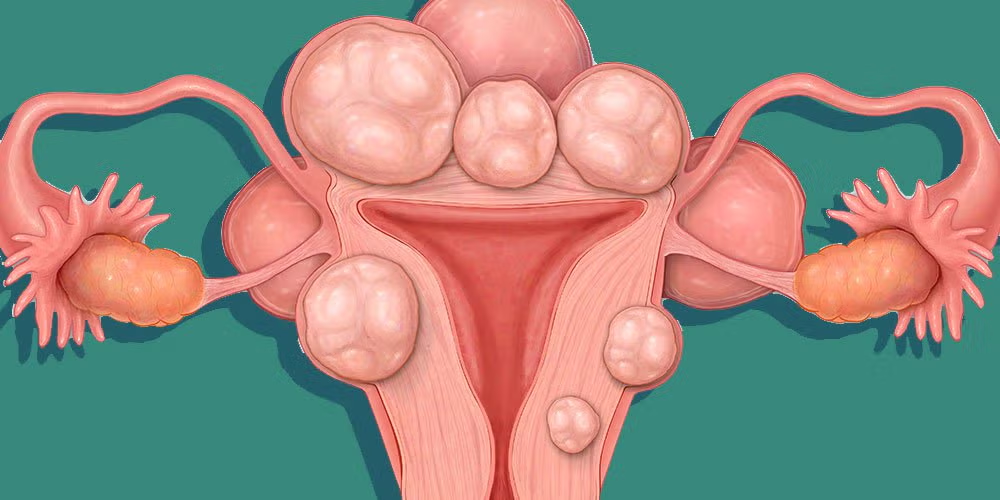
Uterine fibroids are growths made of muscle and connective tissue that develop in or on the wall of the uterus. Doctors also call them leiomyomas or myomas. They are benign, meaning not cancerous, and they almost never turn into cancer.
Fibroids can be as small as a seed or as large as a grapefruit or bigger. A woman can have just one or dozens. They tend to grow during the years a woman has periods, because they respond to estrogen and progesterone, and they usually shrink after menopause.
Fibroids are named by where they grow:
- Submucosal fibroids grow just under the inner lining of the uterus and bulge into the uterine cavity, the space where a pregnancy implants. They are most likely to cause heavy bleeding and fertility problems.
- Intramural fibroids grow within the muscular wall of the uterus. They are the most common type.
- Subserosal fibroids grow on the outer surface of the uterus. They can press on nearby organs like the bladder or bowel.
- Pedunculated fibroids are attached to the uterus by a thin stalk, inside or outside the uterus.
Where a fibroid is located often matters more than how big it is, both for symptoms and for choosing treatment.
How Common Are Fibroids?
Very. By age 50, most women will have developed fibroids at some point, and some estimates put it as high as 70–80%. Fibroids are also the most common reason women in the U.S. have a hysterectomy, surgery to remove the uterus. Many fibroids cause no symptoms and are found by chance during an exam or ultrasound.
Fibroids and Racial Disparities
Fibroids don’t affect all women equally.
Black women carry the heaviest burden. Black women are diagnosed with fibroids roughly three times as often as white women. They tend to develop them earlier in life, and their fibroids tend to be larger, more numerous, and cause more severe symptoms. By age 50, up to 90% of Black women have fibroids.
The gap extends to treatment. Black women are at least twice as likely as white women to have a hysterectomy. They are also more likely to have open surgery, with a large abdominal incision, rather than minimally invasive surgery, which uses small incisions or no incisions. Minimally invasive surgery generally means less pain, fewer complications, and a faster recovery. The size, number, and location of fibroids can legitimately affect which surgery is possible, but race should never be the deciding factor, and research suggests it has been.
Asian and Hispanic women are affected too. A large 2025 Kaiser Permanente study of nearly 2 million women in Northern California found that South Asian, East Asian, and Southeast Asian women were all more likely than white women to be diagnosed with fibroids. Hispanic women’s rates were also higher.
Why the differences? Researchers don’t fully know. Studies have mostly focused on biology and genetics. More recent research is also looking at social and environmental factors, such as chronic stress, diet, pollution, and unequal access to care.
What this means for you: if you’re in a higher-risk group, don’t dismiss heavy or painful periods as normal. Get evaluated early, when more treatment options are available. If you’re told you need a hysterectomy, it’s reasonable to ask whether a uterus-sparing or minimally invasive option is possible, or to get a second opinion.
Symptoms of Fibroids
Many women with fibroids have no symptoms. When symptoms do occur, they can include:
- Heavy or long periods, sometimes with large blood clots
- Anemia, a low red blood cell count caused by blood loss, which can leave you tired, short of breath, or dizzy
- Pelvic pressure or pain, or a feeling of fullness in the lower belly
- Frequent urination or trouble emptying the bladder, from fibroids pressing on it
- Constipation, from fibroids pressing on the bowel
- Lower back pain or pain during sex
- An enlarged belly
- Difficulty getting pregnant, or complications during pregnancy
How Fibroids Are Diagnosed
Fibroids are often first suspected during a pelvic exam, when the uterus feels enlarged or irregular in shape. They are confirmed with imaging:
- Pelvic ultrasound. This imaging test uses sound waves to show the uterus and ovaries. It’s the main tool for finding fibroids and measuring their size and location. Dr. Kim performs ultrasounds in our office.
- Saline infusion sonohysterography. This is an ultrasound done while a small amount of sterile salt water is placed into the uterus. The fluid outlines the uterine cavity, which helps show fibroids growing into it.
- MRI. For large or multiple fibroids, an MRI gives a detailed map that helps plan surgery.
- Hysteroscopy. A thin camera is passed through the cervix to look directly inside the uterus.
Bloodwork may also check for anemia if your periods are heavy.
Do Fibroids Affect Fertility?
Sometimes. Submucosal fibroids, the ones that push into the uterine cavity, are the type most clearly linked to difficulty getting pregnant and to miscarriage, and removing them can improve fertility. Intramural fibroids may affect fertility when they’re large. Subserosal fibroids usually don’t.
During pregnancy, fibroids can sometimes cause pain, bleeding, or problems with the baby’s position or delivery. If you have fibroids and are planning a pregnancy, it’s worth discussing them with your OB/GYN beforehand.
Treatment Options
Not every fibroid needs treatment. The right plan depends on your symptoms, the size and location of your fibroids, your age, and whether you want to become pregnant in the future.
Watchful waiting. Fibroids that cause no symptoms can often simply be monitored with periodic exams and ultrasounds.
Medications. These help control symptoms, especially heavy bleeding:
- Hormonal birth control, including pills and the hormonal IUD, a small device placed in the uterus that releases a hormone to thin the lining and reduce bleeding
- Tranexamic acid, a non-hormonal pill taken during your period to reduce bleeding
- GnRH antagonists, a newer class of medications that lower estrogen levels to reduce bleeding and can shrink fibroids
- Iron supplements to treat anemia
Medications can relieve symptoms, but they don’t remove fibroids, and symptoms often return if you stop.
Procedures that keep the uterus:
- Myomectomy is surgery to remove the fibroids while leaving the uterus in place. It’s often the preferred option for women who want to become pregnant. Depending on the fibroids, it can be done:
- hysteroscopically, through the cervix with no incisions, for fibroids inside the uterine cavity
- laparoscopically or robotically, through a few small incisions in the abdomen
- abdominally (open), through a larger incision, for very large or numerous fibroids
- Uterine fibroid embolization (UFE) is performed by an interventional radiologist. It blocks the blood supply to the fibroids so they shrink.
- Radiofrequency ablation uses heat to shrink fibroids.
Hysterectomy removes the uterus and is the only permanent cure for fibroids. It’s a reasonable choice for some women who are done having children and want a definitive solution, but it should be one option among several, not the only one offered.
Dr. Kim performs gynecologic surgery at Cedars-Sinai Medical Center.
Frequently Asked Questions
Are fibroids cancer?
No. Fibroids are benign. Cancerous growths in the uterine muscle are rare and are a different condition.
Can fibroids go away on their own?
They often shrink after menopause, when hormone levels drop. Before menopause, they usually stay the same size or grow.
Can fibroids come back after a myomectomy?
Yes, new fibroids can develop over time, especially in younger women. Hysterectomy is the only treatment that prevents them from returning.
Can I get pregnant after a myomectomy?
Many women do. Depending on the surgery, you may be advised to wait a few months before trying and may need a C-section for delivery.
Do I need a hysterectomy for large fibroids?
Not necessarily. Many large fibroids can be removed with myomectomy. Ask about all your options.
Fibroid Care at Yunella
If you have heavy periods, pelvic pressure, or trouble getting pregnant, or if you’ve been told a hysterectomy is your only option, a thorough evaluation is worth it. Our fibroid care includes a detailed visit with Dr. Kim, in-office ultrasound, and a treatment plan built around your symptoms and your goals, including whether you want to preserve your fertility.
Call 424-404-8832 or request an appointment to schedule a visit.
This article is for education and does not replace individualized medical advice.