
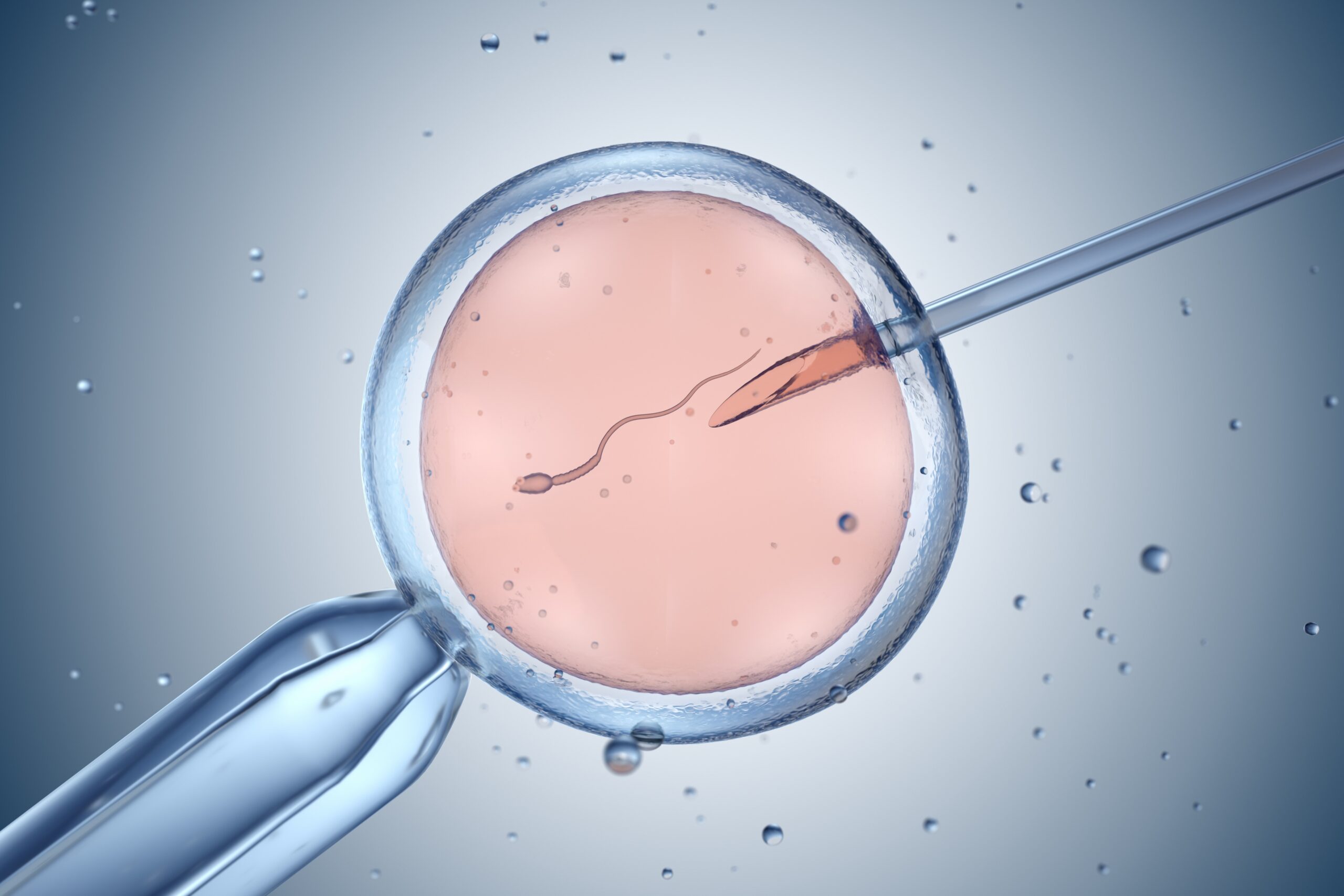
You spent months, sometimes years, getting to a positive pregnancy test. Now someone has written “IVF pregnancy” at the top of your chart and you want to know what that actually means for the next eight months.
The short answer: an IVF pregnancy is not automatically a high-risk pregnancy, but it does change specific parts of how your pregnancy should be monitored. Those changes are concrete and worth knowing, because they are also the parts most commonly skipped.
The distinction that matters most
Most of the extra monitoring in an IVF pregnancy is not because the embryo was created in a lab. It is because of two other things: what caused the infertility in the first place, and what happens to the placenta.
This distinction is not academic. IVF itself is not associated with an increased risk of chromosomal abnormalities. The risk that is observed is largely related to underlying infertility and parental factors, with older age, PCOS, and severe male or female factor infertility being the contributors. If you are 41 and conceived through IVF, most of your genetic risk comes from being 41, not from the IVF.
Placental risk is different. That one appears to be genuinely related to the process, and it drives most of the additional ultrasound in an IVF pregnancy.
What changes in genetic screening
If you had PGT-A, you still need prenatal screening. This surprises almost everyone. Preimplantation genetic testing does not replace the recommendation to offer prenatal screening and diagnostic testing, and prenatal screening and diagnosis should be offered regardless of previous preimplantation genetic testing. The reason is technical: the PGT biopsy is taken from the trophectoderm, which becomes the placenta, not from the inner cell mass, which becomes the fetus. Discordant results are possible, and misdiagnosis happens.
Patients routinely arrive at their first prenatal visit saying they don’t need NIPT because their embryo was already tested. That is not how the test works, and it is worth ten minutes of conversation.
Screening results can read differently after IVF. First-trimester combined screening in IVF pregnancies has a higher potential for false positives, driven by lower PAPP-A and higher total hCG. Cell-free DNA screening can also return a lower fetal fraction. Neither makes screening unreliable, but both mean your results should be interpreted by someone who knows how you conceived.
ICSI is a separate conversation. ICSI is associated with an increased rate of de novo chromosomal abnormalities and allows transmission of defects that might otherwise not result in a pregnancy. Genetic counseling should be offered to all patients who have undergone IVF, and it is particularly worth taking up after ICSI.
What changes at the anatomy scan
This is the part of an IVF pregnancy that deserves the most attention and gets the least.
IVF is associated with a higher risk of placenta previa, vasa previa, placenta accreta spectrum, abnormal placental shape including bilobed and accessory lobes, and marginal or velamentous cord insertion. For that reason, the anatomy ultrasound should specifically document placental location, placental shape, and the cord insertion site, and a follow-up ultrasound at 32 weeks should reassess placental location and evaluate for vasa previa.
Vasa previa is the one to care about. It is rare, it is silent, and if it is identified before labor, outcomes are excellent. If it is not, they are not. An anatomy scan that says “placenta posterior, appears normal” and nothing about cord insertion has not answered the question in an IVF pregnancy.
The cervix should also be visualized between 18w0d and 22w6d, abdominally or transvaginally. Serial cervical length measurement, however, is not recommended when IVF is the only indication.
What changes in fetal cardiac imaging
Congenital heart disease is somewhat more common after IVF, with the highest risk in ICSI and underlying subfertility, and the absolute risk estimated at roughly 1.1% to 3.3%. Fetal echocardiography should be offered in pregnancies achieved with IVF and ICSI, and the AHA recognizes IVF/ICSI conception as an indication.
“Offered” is the correct word. This is a shared decision, not a mandate, and some centers have moved away from routine fetal echo for IVF alone when a detailed anatomy scan is normal. In our practice the detailed ultrasound is performed in the office, and fetal echocardiography is arranged by referral when indicated.
What changes in blood pressure management
IVF is classified as a moderate risk factor for preeclampsia. Within IVF, the risk is not uniform: it is higher with donor oocytes than with your own, and higher with frozen embryo transfer than with fresh.
Here is the nuance most articles get wrong. Because IVF is a moderate risk factor, low-dose aspirin is recommended only when an additional moderate risk factor is present. Realistically, most IVF patients do have a second one, because first pregnancy, age 35 or older, and a BMI above 30 all count. A 38-year-old in her first pregnancy after frozen embryo transfer has three. But the reasoning should be explicit, not assumed.
When aspirin is indicated, it is 81 mg daily, started between 12 and 28 weeks and ideally before 16 weeks, continued until delivery. Starting it before pregnancy has not been shown to reduce rates further.
What changes in growth monitoring and delivery timing
IVF pregnancies carry an increased risk of small-for-gestational-age infants, and the effect is most evident near term. Interestingly, this risk is higher after fresh transfers, the opposite direction from preeclampsia. Assessment of fetal growth should be performed in the third trimester, though serial growth scans are not indicated for IVF alone.
Stillbirth risk is increased roughly two- to three-fold, and it is lower after frozen than fresh transfer. Because of that, weekly antenatal fetal surveillance should begin no later than 36 weeks in IVF pregnancies.
On delivery timing, honesty is better than false precision. Whether elective induction at 39 weeks improves outcomes specifically in IVF pregnancies is not known. What is known is that induction between 39w0d and 40w6d in uncomplicated singleton pregnancies does not increase the risk of cesarean delivery. In practice, that means 39-week delivery is a reasonable plan to discuss, not a rule.
Twins, even after a single embryo transfer
Even with single embryo transfer, the risk of monozygotic twinning is increased. That matters because a monochorionic twin pregnancy is a genuinely high-risk pregnancy with its own surveillance schedule, and it changes the plan more than anything else on this page. Your first ultrasound should establish how many embryos are present and, if there are two, the chorionicity.
When IVF does make a pregnancy high risk
Referral to maternal-fetal medicine becomes appropriate when IVF is combined with something else:
- A multiple gestation, especially monochorionic
- Suspected vasa previa or placenta accreta spectrum
- Donor oocyte pregnancy with chronic hypertension or other vascular risk
- An abnormal finding on screening, anatomy scan, or fetal echo
- Growth restriction identified in the third trimester
- Age 40 or older at delivery, combined with IVF
IVF by itself, in a singleton pregnancy, with a normal anatomy scan and no other risk factors, is generally managed well by a general OB/GYN who knows to look for the specific things above. That is the whole point.
Frequently asked questions
Is an IVF pregnancy automatically high risk?
No. It changes the monitoring plan rather than the risk category. Most IVF singleton pregnancies are uncomplicated.
I had PGT-A. Do I still need NIPT or an amniocentesis?
Screening and diagnostic testing should still be offered. PGT tests placental cells, not the fetus, and discordance is possible.
Should I be on baby aspirin because I did IVF?
Only if you have a second moderate risk factor, which many IVF patients do. It should be a decision your physician walks through with you at the first visit, not a reflex.
Does it matter whether I did a fresh or frozen transfer?
Yes, in opposite directions. Frozen transfers carry higher preeclampsia risk; fresh transfers carry higher growth restriction risk.
Do I need progesterone through the second trimester?
Progesterone supplementation for the sole indication of IVF is not indicated beyond 12 weeks.
How much extra ultrasound does this mean?
More than a standard pregnancy, and at specific points rather than continuously. See how often you need ultrasounds in a high-risk pregnancy.
I’m also over 35. Do the risks add up?
They overlap more than they stack. See Pregnancy after 35: what actually changes?
This article is for education and does not replace individualized medical advice.
Medically Reviewed by David Seil Kim, MD, FACOG– September 17, 2026
Yunella Women’s Health provides personalized obstetric care for high-risk pregnancy in Los Angeles, including concierge maternity care with physician continuity from your first visit through delivery. Located on San Vicente Boulevard, serving Los Angeles and Beverly Hills. Call 424-404-8832.