
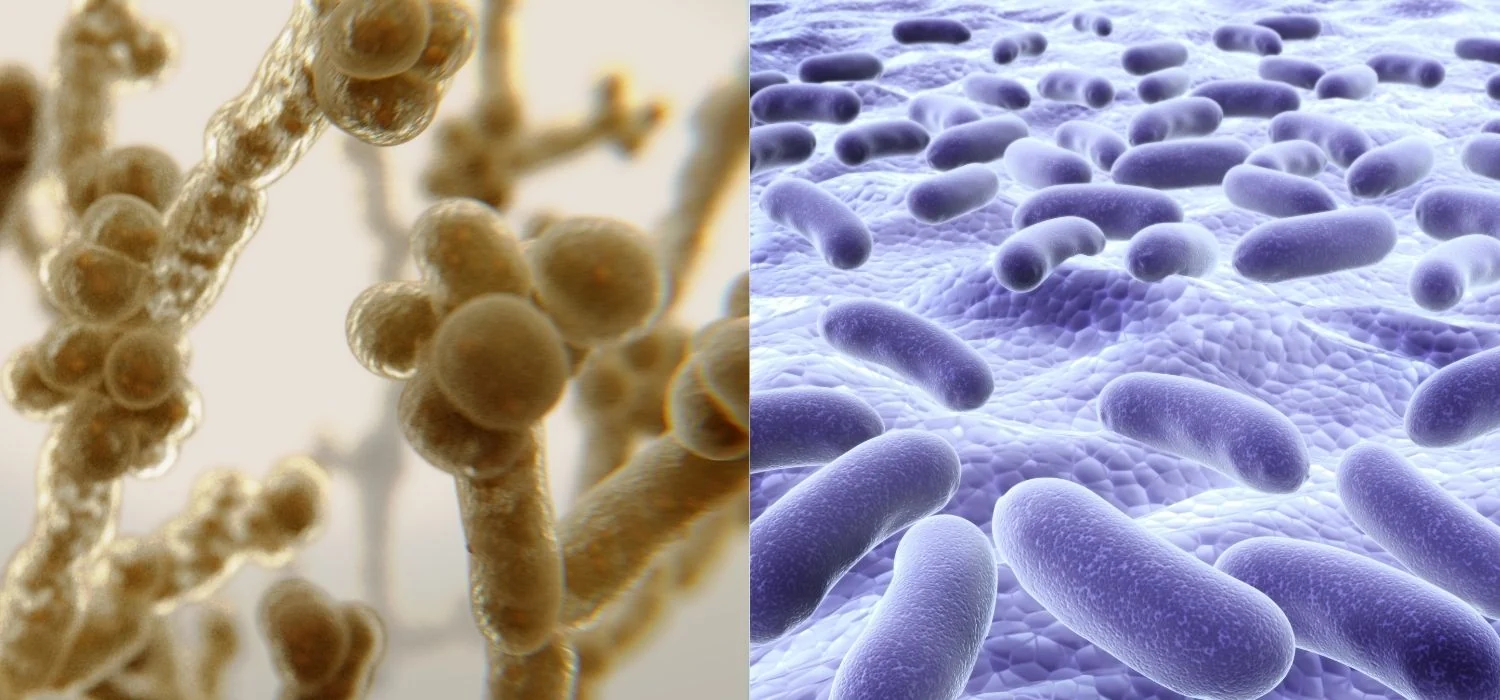
Something feels off. Maybe it’s itching, an odor that wasn’t there last week, or discharge that looks different. So you start guessing. Is it yeast? Is it BV? Will it clear up if you wait a few days?
You’re not alone in guessing. Vaginal infections are one of the most common reasons women see a gynecologist, and the two most common ones, bacterial vaginosis (BV) and yeast infections, feel alike but are treated in completely different ways. A yeast cream does nothing for BV, and a BV antibiotic can actually trigger a yeast infection.
The quick answer: BV usually causes thin, gray-white discharge with a fishy smell and little itching. A yeast infection usually causes thick, white, cottage-cheese-like discharge with intense itching and little or no smell. But the two overlap, you can have both at once, and the medicine for one doesn’t treat the other. If you’re not sure, a test is the only way to know.
This article explains how to tell BV and yeast apart, what else can cause the same symptoms, whether they go away on their own, when to get treated, and how we test and treat them at Yunella Women’s Health in Los Angeles.
BV vs. Yeast Infection: How Can You Tell the Difference?
These are the two that get mixed up most, and they’re close to opposites. BV is a bacterial imbalance, treated with antibiotics. A yeast infection is a fungal overgrowth, treated with antifungals, which are medicines that kill yeast. The medicine for one does nothing for the other.
A few clues point one way or the other:
- Smell is the best single clue. A fishy odor points to BV, especially if it’s stronger after sex or around your period. Yeast usually has little or no smell.
- Itching points to yeast. Yeast tends to cause intense itching, burning, and redness or swelling of the skin around the vaginal opening. BV usually causes little or no itching.
- Look at the discharge. BV discharge is thin, watery and grayish-white. Yeast discharge is thick, white and clumpy.
- Think about what came first. Symptoms that start after a course of antibiotics suggest yeast. Symptoms that start after a new partner, or that flare after sex, suggest BV.
- Acidity differs. BV raises the vagina’s pH, a measure of how acidic it is, while yeast leaves it normal. Home pH test strips are built on this, but they can’t confirm an infection or tell you whether you have two at once.
In short: odor without much itch leans BV, and itch without much odor leans yeast.
These clues are a starting point, not a diagnosis. Plenty of women have itching with BV or no clumpy discharge with yeast, and a third infection, trichomoniasis, can look like either one. If you’re not sure, or a treatment hasn’t worked, testing is the only way to know.
BV, Yeast and Trich: Symptoms Side by Side
Doctors use the word vaginitis for any irritation or infection of the vagina. Three causes account for most cases:
- Bacterial vaginosis (BV), an imbalance of the bacteria that normally live in the vagina. It’s the most common cause of abnormal discharge.
- Yeast infection, an overgrowth of Candida, a yeast (a type of fungus) that normally lives in the vagina in small amounts. About 3 in 4 women have at least one in their lifetime.
- Trichomoniasis (“trich”), a sexually transmitted infection (STI) caused by a parasite, a tiny organism that lives off the body.
Each one has a typical pattern, though real life is messier than a chart.
| Symptom | BV | Yeast infection | Trichomoniasis |
|---|---|---|---|
| Discharge | Thin, gray or white | Thick, white, often clumpy like cottage cheese | Yellow-green, sometimes frothy |
| Odor | Fishy, often stronger after sex or during your period | Usually none | Often unpleasant |
| Itching or burning | Mild or none | Often intense, with redness and swelling | Common, with soreness |
| Pain with sex or urination | Uncommon | Common | Common |
| No symptoms at all | Very common | Uncommon | Very common |
Two things make self-diagnosis hard. First, the symptoms overlap, and many women don’t have the textbook version. Second, you can have more than one infection at once. BV and yeast together is a common combination, and treating only one leaves you with half the problem.
What Else Can Cause These Symptoms?
Not every case of itching or discharge is BV, yeast or trich. Other possibilities include:
- Ureaplasma and mycoplasma, tiny bacteria that standard tests can’t detect. More on ureaplasma below.
- Chlamydia and gonorrhea, which often cause no symptoms at all, or only mild discharge.
- Genital herpes, which can start as burning or irritation before any sores appear.
- Low estrogen after menopause, during perimenopause, or while breastfeeding. Estrogen is a hormone that keeps vaginal tissue healthy. When it drops, the tissue thins and dries, which can cause burning, discharge and pain with sex.
- Irritation or allergy from soaps, scented washes, wipes, laundry products, lubricants or condoms.
Some discharge is also completely normal. Healthy discharge changes through your cycle, from clear and stretchy around ovulation, when an egg is released, to thicker and white before your period. What matters is a change from your own normal, especially with odor, itching or pain.
What About Ureaplasma?
If you’ve been treated for BV, then yeast, then BV again, and the symptoms keep returning, ureaplasma is worth asking about.
Ureaplasma is a very small type of bacteria that can live in the genital and urinary tract. It’s common, and many women carry it with no symptoms or problems at all. But when it overgrows, or shows up alongside an imbalance of vaginal bacteria, it can contribute to symptoms that keep coming back, such as discharge, irritation, burning when you urinate, or an ache low in your belly.
A few things to know:
- It isn’t an STI in the usual sense. It can pass between partners during sex, but a positive result doesn’t mean anyone was unfaithful. Either partner may have carried it for years.
- Standard tests can’t find it. It’s too small to see under a microscope and doesn’t grow on routine cultures. It takes a PCR test, a lab test that looks for a germ’s DNA, which most urgent cares and many offices don’t run for vaginal symptoms.
- It only needs treatment if you have symptoms. Because so many healthy women carry it, Dr. Kim treats ureaplasma only when it’s found together with symptoms. Unnecessary antibiotics can upset your healthy bacteria.
- It’s on every panel we run. You don’t have to ask for it, and it’s never skipped.
Want the full picture? Read our article on ureaplasma and recurring vaginal infections, which covers testing, treatment, partners, fertility and pregnancy.
What Causes BV?
A healthy vagina is home to helpful bacteria called lactobacilli. They keep the vagina slightly acidic, which keeps other bacteria under control. BV happens when the lactobacilli drop and the other bacteria overgrow, meaning they multiply out of control.
BV isn’t caused by poor hygiene. In fact, douching (rinsing inside the vagina) and scented washes make it more likely, because they strip away the protective bacteria. Other things linked to BV include a new sexual partner, more than one partner, and sex without condoms.
Is BV an STI? Can Men Get BV?
Not officially, but sex plays a role. BV is uncommon in women who have never been sexually active, and the bacteria involved can pass between partners.
Men don’t get BV, because it’s a condition of the vagina. But men can carry BV-related bacteria and pass them back during sex, which is one reason BV keeps returning for some women. BV-related bacteria can also pass between female partners.
A BV diagnosis doesn’t mean anyone was unfaithful. It does mean that for women whose BV keeps returning, a partner may be part of the picture. More on that below.
What Causes a Yeast Infection?
Small amounts of Candida live in the vagina without causing trouble. A yeast infection happens when something lets it overgrow. Common triggers:
- Antibiotics, which kill the protective bacteria along with the ones they were meant for
- Pregnancy and other times when estrogen is high
- Diabetes, especially when blood sugar runs high
- A weakened immune system, including from steroid medications
A yeast infection isn’t an STI, and it isn’t a sign of being unclean. Often there’s no clear trigger at all.
What Causes Trichomoniasis?
Trich is caused by a parasite called Trichomonas vaginalis that passes between partners during sex. It’s a very common STI that can be cured, and most people who have it have few or no symptoms. That’s how it spreads quietly, and why it can show up in a long-term relationship.
Can BV or a Yeast Infection Go Away on Its Own?
It depends on which one you have.
- BV: sometimes. A mild case can clear as your bacteria rebalance. But it often lingers or comes back, and if you have symptoms, treatment is recommended.
- Yeast: occasionally. A very mild infection may settle by itself. Most need an antifungal to clear fully.
- Trich: no. Without treatment it can last for months or years, and you can pass it to a partner the whole time.
Waiting it out has a cost. Untreated BV and trich both make it easier to catch other STIs, including HIV. During pregnancy, both have been linked to preterm birth, meaning the baby is born too early. And if you’re guessing which infection you have, you can’t know whether yours is the kind that might resolve.
Can I Use an Over-the-Counter Treatment?
For yeast: If you’ve had a yeast infection diagnosed before and these symptoms feel exactly the same, an over-the-counter antifungal, meaning one sold without a prescription, is a reasonable first step.
But it’s easy to guess wrong. In one study of women buying over-the-counter yeast treatments, only about 1 in 3 actually had a yeast infection alone. The rest had BV, a mix of infections, something else, or no infection at all.
For BV: No over-the-counter medicine cures BV. Pharmacy shelves carry pH gels, probiotics and boric acid suppositories marketed for vaginal odor, but none of these replaces a prescription antibiotic for an active infection. Boric acid is sometimes used under a doctor’s direction for infections that keep coming back. It should never be taken by mouth or used during pregnancy. Talk to Dr. Kim before trying any of these.
For trich: There is no over-the-counter treatment. It needs a prescription.
When Should You Get Treated?
Come in rather than treating yourself if:
- This is the first time you’ve had these symptoms
- You’re not sure which infection it is
- An over-the-counter treatment didn’t work, or symptoms came back within two months
- You’ve had several infections in the past year
- You’re pregnant
- You have a new partner, or there’s any chance of an STI
- You notice sores, blisters or bleeding that isn’t your period
Get care right away, without waiting for an appointment, if you have fever with pelvic or lower belly pain, severe pain, or you’re pregnant and have bleeding or leaking fluid.
Should I Go to Urgent Care or See a Gynecologist?
Urgent care is the right call for an emergency, or when you need to be seen at night or on a weekend. For vaginal symptoms on a weekday, here’s what we recommend instead.
Call us first. We can usually see you the same day or within 2 to 3 days, so you rarely have to choose between fast care and the right care. You’ll see Dr. Kim, an OB-GYN who treats these infections every day.
Get tested before you take anything. It’s tempting to start whatever medicine you can get soonest. But the wrong medicine won’t help, and it can make the real problem harder to find.
If you’ve already been to urgent care and your symptoms are back, come in. Tell us what you were given and when. That history helps Dr. Kim work out what was missed.
Here’s why we suggest this. Urgent care is built to treat a wide range of problems quickly, and that affects how vaginal symptoms get handled there:
- The swab is often limited. Many urgent cares run a basic BV panel that checks for only a few bacteria. It may not look for less common yeast species, ureaplasma, or a second infection happening at the same time.
- Antibiotics are often prescribed before the results are back. If you’re treated for BV but you actually have a yeast infection, the antibiotic won’t help, and it can make the yeast worse. It works the other way too. If you’re treated for yeast but you actually have BV, the antifungal does nothing for it.
- There’s no antibiotic resistance testing. Antibiotic resistance means the bacteria you have can survive certain antibiotics. Without that information, even a correct BV diagnosis can be treated with a drug that won’t work for you.
The result is a cycle many of our patients know well. You get treated for the most likely cause, feel better for a little while, and end up back where you started.
How We Test for BV and Yeast Infections at Yunella
Dr. Kim starts with your symptoms, your history and an exam. Then he collects a simple swab, which goes to our lab partner, HealthTrackRx, for PCR testing. PCR is a lab test that looks for a germ’s DNA, so it can find infections that a quick look under a microscope misses.
Every time we test for vaginal symptoms, our panel checks for all of these from a single swab:
- Bacterial vaginosis: Gardnerella vaginalis and the other bacteria linked to BV (Fannyhessea vaginae, Megasphaera, BVAB2 and BVAB3, Mobiluncus)
- Yeast: Candida albicans, the most common yeast, plus less common types (C. glabrata, C. krusei, C. parapsilosis, C. tropicalis). Some of these don’t respond well to standard yeast treatment, which is one reason yeast infections keep coming back.
- Ureaplasma and mycoplasma: Ureaplasma parvum, Ureaplasma urealyticum and Mycoplasma hominis
- STIs: chlamydia, gonorrhea, trichomoniasis, Mycoplasma genitalium, and herpes simplex virus 1 and 2
You don’t need to remember those names. What matters is that you don’t have to be tested one condition at a time, and nothing is skipped because it wasn’t on the list.
Results usually come back the next day, so you’re not waiting a week wondering what’s wrong, and treatment can start quickly.
Reading Your Results: What Gardnerella, Megasphaera and BVAB2 Mean
If you’ve seen your lab report in the patient portal, the names can be confusing. Here is what the most common ones mean.
- Gardnerella vaginalis is the bacteria most linked to BV. Many healthy women carry small amounts of it, so a positive result on its own doesn’t always mean you have BV.
- Megasphaera (often reported as Megasphaera type 1) and BVAB2 (BV-associated bacterium 2) are much more specific to BV. When they show up along with symptoms, they make BV more likely.
- Fannyhessea vaginae, formerly called Atopobium vaginae, is another BV-linked bacteria.
No single result decides the diagnosis. Dr. Kim reads the whole panel together with your symptoms and exam, then picks treatment based on the resistance results from the same test. If something on your report doesn’t make sense, call us and ask.
How Are BV and Yeast Infections Treated?
Treatment depends on what the test finds.
- BV is treated with an antibiotic, either pills or a vaginal gel or cream.
- Yeast is treated with an antifungal, either a pill or a vaginal cream. Less common yeast species may need a different medication or a longer course.
- Trich is treated with antibiotic pills. Your partner needs treatment at the same time, and you should both wait to have sex until you’ve finished.
The same test also checks for antibiotic resistance. Instead of guessing, Dr. Kim chooses your medication based on your results, so the first treatment is more likely to work.
If you have more than one infection, Dr. Kim plans the treatments together, so clearing one doesn’t set off the other.
Why Do BV and Yeast Infections Keep Coming Back?
Recurrence is frustratingly common. BV returns within six months for more than half of women treated for it. A few reasons infections come back:
- The first diagnosis was incomplete. A second infection, or an organism like ureaplasma, was never tested for.
- It’s a less common yeast. Some less common species of yeast, such as Candida glabrata, don’t respond well to the usual yeast medicines.
- The bacteria are resistant to the antibiotic that was used, meaning that drug no longer kills them.
- A partner is passing it back. In a 2025 trial in the New England Journal of Medicine, BV came back in 35% of women whose male partners were treated at the same time, compared with 63% of women treated alone. Later that year, ACOG updated its guidance to say partner treatment should be considered for women whose BV keeps coming back. ACOG is the national organization of OB-GYNs.
- Something that sets it off hasn’t changed, such as high blood sugar, repeated antibiotics, or douching.
If your infections keep returning, tell Dr. Kim how often and what you’ve already tried. That history shapes the plan, which may include a longer course of treatment, a different medication, or a conversation about treating your partner.
Can I Prevent BV and Yeast Infections?
Not entirely, but a few habits lower the odds:
- Skip douching and scented washes. The vagina cleans itself, and warm water on the outside is enough.
- Use condoms, especially with a new partner.
- Take antibiotics only when you need them.
- Change out of wet swimsuits and sweaty workout clothes.
- If you have diabetes, keep your blood sugar well controlled.
There’s no home remedy proven to cure an active infection. Yogurt, garlic, tea tree oil and apple cider vinegar have not been shown to work, and some can irritate the skin.
What If I’m Pregnant?
Tell us about any symptoms, and don’t treat yourself first. BV and trich during pregnancy have been linked to preterm birth and to premature rupture of membranes, which is when your water breaks too early. Yeast infections are also more common in pregnancy. All three can be treated safely. Dr. Kim chooses medications that are safe for your stage of pregnancy. See our pregnancy care and our guide to high-risk pregnancy.
Frequently Asked Questions
What’s the difference between BV and a yeast infection? BV is a bacterial imbalance that usually causes thin, gray discharge and a fishy smell. A yeast infection is a fungal overgrowth that usually causes thick, white discharge and intense itching. They’re treated with different medicines, so getting the right diagnosis matters.
Can I have BV and a yeast infection at the same time? Yes, and it’s common. It’s one reason a treatment aimed at only one of them doesn’t fully work.
What does BV smell like? Most women describe a fishy smell. It’s often stronger after sex or during your period, because both make the vagina less acidic for a while.
Does a yeast infection smell? Usually not, or only slightly. A strong fishy smell points more toward BV or trich. If you have itching and a strong odor, you may have more than one infection.
What does yeast infection discharge look like? Typically thick, white and clumpy, like cottage cheese, with little or no smell. Some women have only itching and redness, with very little discharge.
Can men get BV? Can I get BV from a guy? Men don’t get BV, but they can carry BV-related bacteria and pass them back during sex. In a 2025 trial, treating male partners at the same time cut BV recurrence from 63% to 35%.
Does my partner need treatment? For trich, always. For a yeast infection, usually not. For BV that keeps returning, it may help. Dr. Kim will go over it with you.
Is there an over-the-counter treatment for BV? No. Nothing sold without a prescription cures BV. Products marketed for vaginal odor may mask symptoms without treating the infection.
Can I have sex while I’m being treated? It’s best to wait until you’ve finished treatment and your symptoms are gone. With trich, wait until both you and your partner have finished.
Can antibiotics cause a yeast infection? Yes. Antibiotics reduce the protective bacteria in the vagina, which gives yeast room to overgrow. If this has happened to you before, mention it when you’re prescribed an antibiotic.
I treated a yeast infection and it didn’t work. Now what? There’s a good chance it wasn’t yeast, or wasn’t only yeast. Come in for testing rather than trying a second round.
Do I need to be retested after treatment? For BV and yeast, only if symptoms continue or return. For trich, retesting about three months later is recommended, because reinfection is common.
Is it normal to have discharge every day? Yes. Some discharge is healthy and changes through your cycle. A change in color, smell or amount, or new itching or pain, is the reason to get checked.
I’m trying to get pregnant. Should I deal with this first? Yes. It’s worth clearing up recurring symptoms before you start trying, or before fertility treatment such as letrozole IUI. A preconception visit is a good time to sort it out.
Should I get tested at my annual exam if I feel fine? Not for BV, yeast or ureaplasma. Without symptoms, a positive result usually doesn’t need treatment. Your annual well-woman exam covers the screenings recommended for your age and history, including STI screening when it applies.
BV and Yeast Infection Testing and Treatment at Yunella
You shouldn’t have to guess, and you shouldn’t have to wait a week for an answer. We can usually see you the same day or within two to three days, and next-day PCR results mean you’re treated for what’s actually causing your symptoms. Hear from our patients in their own words in our patient films.
Call 424-404-8832 or request an appointment to schedule a visit.
Medically reviewed by David Seil Kim, MD, PhD, FACOG · Last reviewed: October 15th, 2026
This article is for education and does not replace individualized medical advice.