
Your Pap smear came back abnormal. Or your HPV test was positive. Now you’re hearing a word you may never have heard before: colposcopy. It’s easy to assume the worst.
Here’s what is true for most women. An abnormal result is common, and it usually isn’t cancer. A colposcopy is how we find out what your result means. At Yunella Women’s Health in Los Angeles, it’s done in our office by Dr. Kim. This article explains when a colposcopy is done, the steps that lead up to one, what the appointment is like, and what happens next, whether your results come back normal or abnormal.
What Is a Colposcopy?
A colposcopy (kol-POS-kuh-pee) is a close-up exam of your cervix. The cervix is the lower, narrow end of the uterus that opens into the vagina.
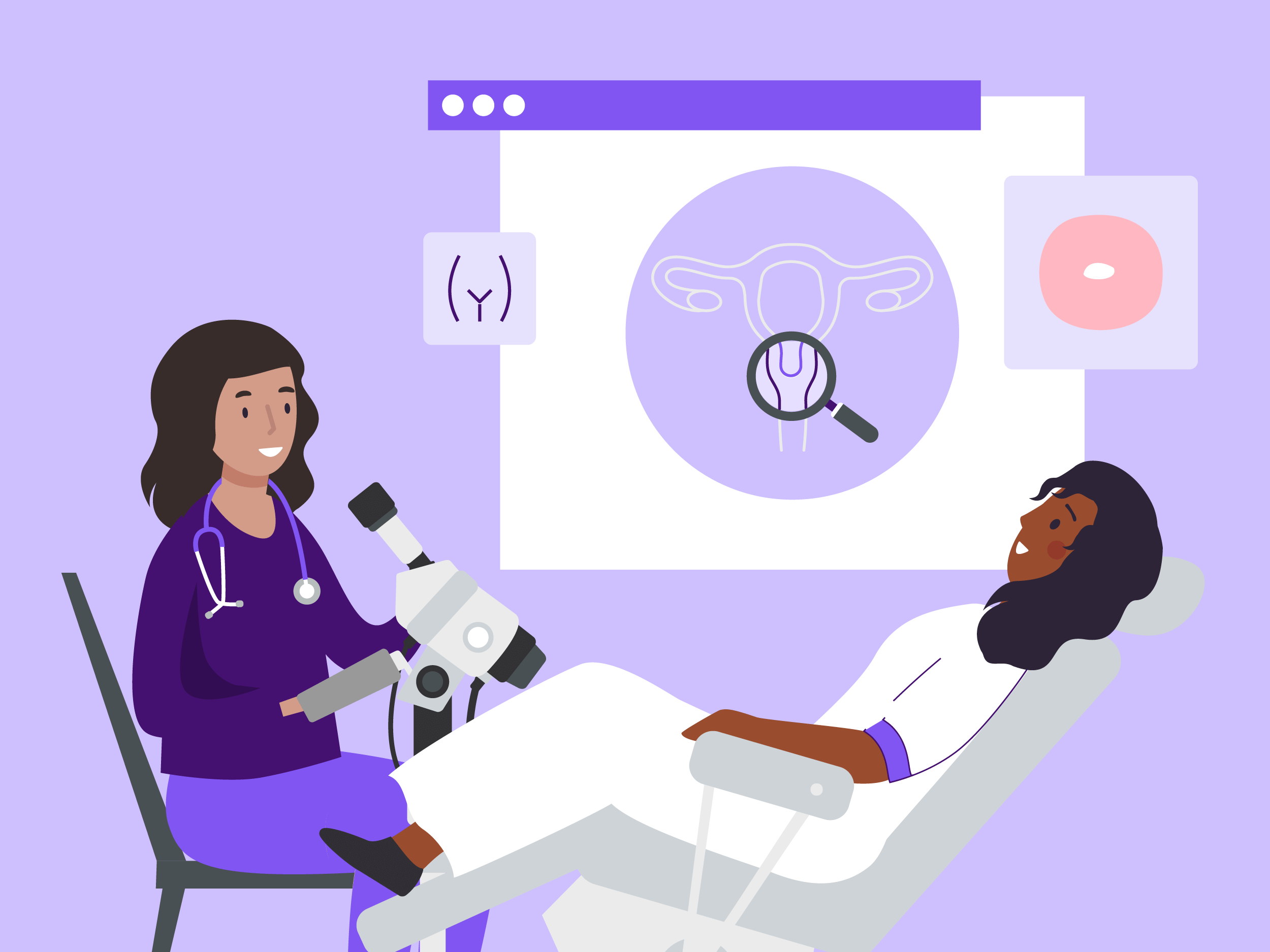
Dr. Kim uses a colposcope, a magnifying instrument with a bright light. Think of it as a pair of binoculars on a stand. It stays outside your body the whole time. It lets him see changes on the cervix that can’t be seen with the eye alone.
A Pap smear is a screening test. It can tell us that some cells look unusual, but it can’t tell us where they are or how serious the change is. A colposcopy answers those questions. If Dr. Kim sees an area that needs a closer look, he takes a biopsy, a tiny sample of tissue, during the same appointment.
When Is a Colposcopy Done?
The most common reason is a cervical cancer screening result that needs a closer look. According to MedlinePlus, a service of the National Library of Medicine, you may need a colposcopy when:
- Your Pap test shows abnormal cells
- You test positive for high-risk HPV, especially types 16 or 18, or an HPV infection that hasn’t cleared on repeat testing
- Your cervix looks unusual during a routine pelvic exam
- You have bleeding after sex or other bleeding without a clear cause
- You’ve been treated for abnormal cells before and need a follow-up check
HPV stands for human papillomavirus. It’s a very common virus passed through intimate skin-to-skin contact, and it causes nearly all cervical cell changes. The CDC says nearly everyone will get HPV at some point, and about 9 out of 10 infections go away on their own within two years. A colposcopy is for the smaller number of cases where the virus stays and starts to change cells.
Not every abnormal result leads to a colposcopy. Sometimes the right next step is simply repeating the Pap test in a year. Which path you’re on depends on your result and your history, as the next section explains.
What Does an Abnormal Pap Smear Mean? Reading Your Results
An abnormal Pap smear means some of the cells collected from your cervix looked different from normal under a microscope. It does not mean you have cancer. Most abnormal results are caused by HPV, a very common virus, and the cell changes are often mild and go away on their own. Your result is a signal to look more closely, and that’s what a colposcopy is for. Here’s what the words on your report mean.
Pap reports use abbreviations that can look alarming. Here is what the National Cancer Institute says the common ones mean:
- ASC-US. Some cells don’t look completely normal, and it isn’t clear why. This is the most common abnormal finding. An HPV test usually decides the next step.
- LSIL. Low-grade changes, usually caused by an HPV infection. These often go away on their own.
- ASC-H. Some cells look abnormal and a high-grade change can’t be ruled out. A colposcopy is the usual next step.
- HSIL. High-grade changes. These cells are moderately or severely abnormal and could become cancer in the future if they aren’t treated. A colposcopy is the usual next step.
- AGC. Abnormal glandular cells, a different type of cell found in the cervical canal and uterus. A colposcopy is the usual next step.
None of these words means cancer. They describe how the cells looked on a screening test, and screening tests are designed to catch changes early.
What Steps Lead to a Colposcopy?
Nobody starts with a colposcopy. It’s the end of a short chain of steps, and most women never get past the first one.
- Your screening test. At your well-woman visit, Dr. Kim collects a small sample of cells from your cervix. Your specimen is sent out where the lab then runs a Pap test, an HPV test, or both. The CDC recommends starting Pap tests at age 21, with screening every three to five years after that depending on your age and the test used.
- The lab reads your sample. The CDC notes results can take as long as three weeks.
- Dr. Kim reviews the result against your history. Current ASCCP guidelines, the national standard for managing abnormal results, don’t look at one test alone. They weigh your current result together with your past results, any earlier treatment, and your age to estimate your personal risk.
- Dr. Kim will contact you and explain it. At Yunella, abnormal results are explained to you directly. They aren’t left in a portal for you to interpret alone.
- You get one of three plans. If your risk is low, you come back for a repeat test in one or three years. If your risk is higher, the next step is a colposcopy. In a small number of cases with clearly high-grade results, treatment may be offered without waiting.
- We schedule your colposcopy. It’s done here, in the same office you already know, and can often be arranged within days.
If your Pap or HPV test was done at another office, you can still have your colposcopy at Yunella. Bring or send us your results so nothing has to be repeated.
How Do I Prepare?
There isn’t much to do, but a few things help Dr. Kim get a clear view:
- Pick a day when you’re not on your period. If your period arrives early, call us and we’ll move the appointment.
- Ask about a pain reliever. Dr. Kim recommends taking Ibuprofen about 30-60 minutes prior to the procedures.
- Tell us if you are or might be pregnant. A colposcopy is still safe, but it changes the plan. More on that below.
- Bring someone if you’d like. Partners, family or a friend are welcome in the room for support.
You can eat normally, and you won’t need a ride. Most patients drive themselves home.
What Happens During a Colposcopy, Step by Step?
The whole visit feels a lot like a Pap test. It takes about 15 minutes.
- Dr. Kim explains your result first. Before anything starts, he goes over what your Pap or HPV test showed and what he’ll be looking for. You’ll know what it will feel like before it happens.
- You lie back as you would for a Pap. He places a speculum, the same instrument used for a Pap test, to gently hold the vaginal walls apart so the cervix is visible.
- He applies a solution to the cervix. Dr. Kim applies a vinegar solution to the cervix. It makes abnormal areas stand out.
- He looks through the colposcope. It is a light that sits outside the vagina and never goes inside you. Dr. Kim talks you through what he’s seeing as he goes.
- If an area needs sampling, he takes a biopsy. This is done in the same appointment, so you don’t need a second visit. Most women feel a quick pinch.
- He also samples the cervical canal. This is called an endocervical curettage, or ECC. It collects cells from just inside the opening of the cervix, an area the colposcope can’t see. It causes a short cramp.
- He stops any bleeding. A medicine applied to the biopsy spot controls bleeding. It can cause a coffee ground discharge for a few days, which is normal.
If Dr. Kim sees nothing that needs sampling, there is no biopsy, and he will tell you.
What Should I Expect Afterward?
If you didn’t have a biopsy, you can go straight back to your normal day. A little spotting is possible.
If you had a biopsy, MedlinePlus notes you may be sore for a day or two, with some cramping and light bleeding. A little bleeding and discharge for up to a week is normal. During that time:
- Use pads, not tampons
- Hold off on intercourse for about a week, or as long as Dr. Kim advises
Most patients go back to work the same day. We give you aftercare instructions before you leave.
Call us right away at 424-404-8832 if you have heavy bleeding, belly or pelvic pain that doesn’t ease, a fever, chills, or discharge with a bad smell.
When Do I Get My Colposcopy Results?
What Dr. Kim sees through the colposcope, he tells you during the visit. If a biopsy was taken, it goes to a pathology lab, where a specialist examines the tissue under a microscope. Results can take up to two weeks.
Either way, Dr. Kim goes over the result with you himself and tells you what the next step is, if there is one.
What If My Results Are Normal?
A normal result means the biopsy from the colposcopy found no precancer. Precancer means cells that are not cancer but could turn into cancer over time if left alone.
This is the most reassuring outcome, and it’s a common one. So why was the Pap screening test abnormal? Usually because of an HPV infection or a minor cell change that your body is already clearing.
What happens next:
- You come back sooner than the usual schedule. Most often that means a repeat HPV test or Pap in about a year, not the usual three to five. This confirms the change has gone away.
- If the follow-up tests are normal, you return to routine screening at your regular well-woman visits.
- If HPV is still present or the cells still look abnormal, Dr. Kim may recommend another colposcopy.
A normal result doesn’t mean the first test was wrong or that the colposcopy was unnecessary. It means the system worked. You were checked closely, and nothing needs treatment.
What If My Results Are Abnormal?
An abnormal result means the biopsy found abnormal cells. It still usually doesn’t mean cancer.
Biopsy results are reported as CIN, which stands for cervical intraepithelial neoplasia. That’s the medical term for abnormal cells on the surface of the cervix. CIN is graded from 1 to 3 by how abnormal the cells look and how much of the tissue is affected. The National Cancer Institute describes each grade this way:
- CIN 1: mild changes. These usually go away on their own and don’t need treatment. You come back for repeat testing, typically in a year, to make sure they’ve cleared.
- CIN 2: moderate changes. These are typically treated by removing the abnormal cells. But CIN 2 can also go away on its own, so some women, after talking it through with Dr. Kim, choose close monitoring with a colposcopy every six months. Treatment is needed if it progresses to CIN 3 or doesn’t clear within one to two years.
- CIN 3: severe changes. CIN 3 is not cancer, but it can become cancer if it isn’t treated. Treatment is recommended right away unless you’re pregnant.
- AIS: adenocarcinoma in situ. This is a precancer in the glandular cells of the cervical canal. It’s less common and always needs treatment. Dr. Kim will go over the options with you in detail.
- Cancer. This is rare in women who have been screened regularly. If a biopsy does show cancer, Dr. Kim explains exactly what was found and coordinates your care with a gynecologic oncologist, a surgeon who specializes in cancers of the female reproductive system.
How are abnormal cells treated at Yunella?
The most common treatment is a LEEP, short for loop electrosurgical excision procedure. A thin wire loop carrying an electrical current removes the abnormal tissue. At Yunella, LEEP is one of our in-office procedures. Dr. Kim does it under local anesthetic, meaning the cervix is numbed while you stay awake, and it takes about 15 minutes.
Because a LEEP removes a small part of the cervix, it can slightly raise the risk of preterm birth in a later pregnancy. If you haven’t finished having children, Dr. Kim talks this through with you before the procedure.
After treatment, you’ll have follow-up testing, usually starting at about six months, to confirm the abnormal cells are gone. Treatment works for most women, and catching these changes at this stage is exactly how cervical cancer is prevented.
What If I’m Pregnant?
A colposcopy is generally safe during pregnancy. Pregnancy does raise the chance of bleeding after a biopsy, so Dr. Kim is more selective about when to take one.
If high-grade changes are found, treatment usually waits until after delivery. In the meantime, Dr. Kim monitors the cervix while continuing your prenatal care, so one physician is following both.
Frequently Asked Questions
Does a colposcopy hurt? Most women describe it as similar to a Pap test, with pressure from the speculum. A biopsy feels like a sharp pinch or a strong cramp that passes in seconds.
How long does it take? About 15 minutes, plus time before and after to talk with Dr. Kim.
Does an abnormal Pap mean I have cancer? Almost always no. As the CDC explains, there are many reasons a result might not be normal, and it usually does not mean cancer.
Does a positive HPV test mean my partner was unfaithful? No. HPV can stay quiet in the body for years. The National Cancer Institute notes that a positive test after years of negative ones isn’t necessarily a new infection. An old one can become active again.
Can I have a colposcopy on my period? It’s best to avoid it, because bleeding makes the cervix harder to see. If your period starts, call us and we’ll reschedule.
Will a colposcopy affect my fertility? No. A colposcopy and a small biopsy don’t affect your ability to get pregnant or carry a pregnancy. A LEEP is a different conversation, and Dr. Kim has it with you before any treatment.
Can I drive home and go back to work? Yes. No sedation is used, and most patients return to their normal day.
What’s the difference between a colposcopy and a LEEP? A colposcopy is a look, sometimes with a small biopsy. A LEEP is a treatment that removes abnormal tissue. The colposcopy comes first and determines whether a LEEP is needed.
Where can I read more? The American College of Obstetricians and Gynecologists has a patient guide to colposcopy, and the National Cancer Institute publishes a free booklet, Understanding Cervical Changes. For more from Dr. Kim, browse our Health Library.
Colposcopy at Yunella
If you’ve been told you need a colposcopy, you don’t have to wait weeks for a referral or meet a new doctor in a new building. Dr. Kim explains your result, performs the colposcopy in our office, and goes over the findings with you himself. If treatment is needed, that happens here too.
Call 424-404-8832 or request an appointment. Learn more about in-office procedures and well-woman care at Yunella, or see what our patients say in their reviews and testimonial films.
Medically reviewed by David Seil Kim, MD, PhD · Last reviewed: October 22nd, 2026
This article is for education and does not replace individualized medical advice.