
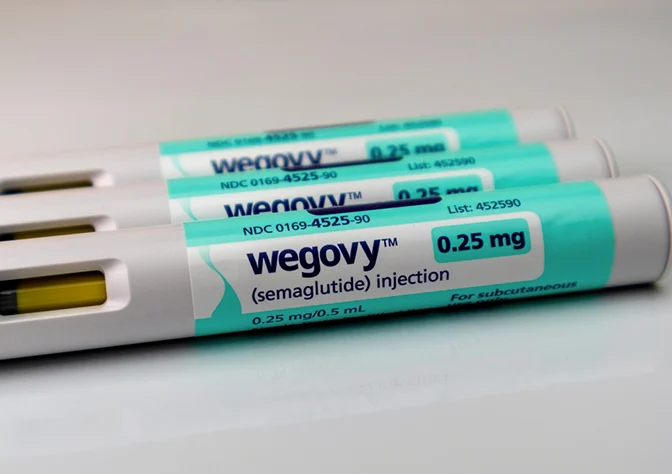
Ozempic. Wegovy. Mounjaro. Zepbound. You’ve heard the names from friends, from social media, maybe from your own group chat. What you probably haven’t heard is a clear explanation of what these medications do, how they differ from each other, and whether they make sense for where you are in life right now.
That last part matters more than most articles admit. A woman who just had a baby, a woman with PCOS who wants to get pregnant next year, and a woman in menopause are three different patients. The same prescription can be right for one and wrong for another.
At Yunella Women’s Health in Los Angeles, Dr. David Seil Kim has prescribed GLP-1 medications since 2023 as part of our medical weight management care. This article explains what these medications are, how semaglutide, tirzepatide and retatrutide compare, and how they fit into four situations we see every week: general weight loss, PCOS, menopause, and the months after having a baby.
What Are GLP-1 Medications?
GLP-1 stands for glucagon-like peptide-1. It’s a hormone your gut releases after you eat. It does three things:
- It tells your brain you’re full. Appetite drops, and so does the constant background thinking about food that many patients call “food noise.”
- It slows how fast your stomach empties. Food stays with you longer, so you feel satisfied on less.
- It helps your pancreas release insulin when your blood sugar rises. Insulin is the hormone that moves sugar out of your blood and into your cells.
The GLP-1 your body makes lasts only a few minutes. GLP-1 medications are built to act like that hormone but last about a week. Doctors call them GLP-1 receptor agonists. A receptor is the spot on a cell where a hormone attaches, like a key fitting a lock. An agonist is a medication that fits the same lock and turns it on.
These medications were first developed for type 2 diabetes. Doctors noticed that patients were also losing a meaningful amount of weight, and the medications were then studied and approved for weight management as well.
Is This Just About Willpower?
No, and this is the part patients are often relieved to hear. Appetite, fullness and where your body stores fat are controlled by hormones. Those hormones shift with pregnancy, with conditions like PCOS, and with menopause. When your weight changes even though your habits haven’t, something has usually changed underneath.
That’s why Dr. Kim starts with an evaluation, not a prescription. A GLP-1 medication is one tool. It works best when the cause of the weight change has been looked for first.
Semaglutide vs. Tirzepatide vs. Retatrutide: What’s the Difference?
The brand names are confusing because one medication is often sold under two names, one for diabetes and one for weight. What matters is the ingredient, and the main difference between ingredients is how many hormones each one copies.
- Semaglutide (Ozempic, Wegovy) copies one hormone, GLP-1. Average weight loss in trials is about 14% to 15% of body weight. It is FDA approved.
- Tirzepatide (Mounjaro, Zepbound) copies two hormones, GLP-1 and GIP. Average weight loss in trials is about 20% of body weight. It is FDA approved.
- Retatrutide copies three hormones, GLP-1, GIP and glucagon. Average weight loss in its main trial was about 28% at the highest dose. It is not FDA approved.
All three are injections you give yourself once a week. The dose starts low and is raised slowly over several weeks so your body can adjust.
Semaglutide (Ozempic, Wegovy)
Semaglutide copies one hormone, GLP-1. It has been on the market the longest, so it has the most safety data behind it. The FDA approved Wegovy for weight management in 2021.
Tirzepatide (Mounjaro, Zepbound)
Tirzepatide copies two hormones: GLP-1 and GIP. GIP stands for glucose-dependent insulinotropic polypeptide. It’s a second gut hormone that also helps with insulin and appetite, and the two together appear to work better than GLP-1 alone.
In the SURMOUNT-5 trial, published in the New England Journal of Medicine in 2025, the two medications were compared directly in adults without diabetes. After 72 weeks, people taking tirzepatide lost an average of about 20% of their body weight. People taking semaglutide lost about 14%.
That doesn’t make tirzepatide the right choice for everyone. Some patients tolerate one better than the other, insurance coverage differs, and tirzepatide has a birth control interaction that semaglutide doesn’t. More on that below.
Retatrutide: What It Is and Why You Can’t Get It Yet
You may have seen “reta” mentioned online. Retatrutide is an experimental medication made by Eli Lilly, the same company that makes Zepbound. It copies three hormones: GLP-1, GIP and glucagon. Glucagon is a hormone that tells the liver to release stored energy, and adding it may help the body burn more calories. That’s why retatrutide is sometimes called a “triple agonist.”
The early results are striking. In the company’s TRIUMPH-1 trial, reported in May 2026, adults on the highest dose lost an average of about 28% of their body weight over 80 weeks. Side effects were similar to the other medications, mostly nausea, diarrhea, constipation and vomiting.
Here is the important part. Retatrutide is not FDA approved. The manufacturer has said it plans to apply for approval in early 2027, and FDA review usually takes close to a year after that. Until then, the only legal way to receive it is inside a clinical trial.
Anything sold today as retatrutide, including vials labeled “for research use only” and products from online peptide sellers, is not the real medication from the trials. The FDA has warned that retatrutide cannot legally be compounded and that these products are of unknown quality and may be harmful. Dr. Kim does not prescribe it.
GLP-1 Medications for General Weight Loss
This is the use most people have heard about. The FDA approved these medications for adults with a body mass index (BMI) of 30 or higher, or 27 or higher with a weight-related health condition such as high blood pressure. BMI is a number calculated from your height and weight.
At Yunella, there’s no weight requirement to come in and talk. Whether medication is appropriate is a separate decision Dr. Kim makes with you after an evaluation. A medical weight management visit covers:
- Your history. Cycles, sleep, energy, pregnancies, medications, family history, and what you’ve already tried.
- What might be driving the change. Thyroid problems, insulin resistance, PCOS, and some medications can all cause weight gain. Insulin resistance means your body needs more insulin than normal to control blood sugar.
- Whether a GLP-1 fits. If it does, Dr. Kim explains the benefits, the side effects, and what happens when you stop, before you start.
A few things are worth knowing up front:
- The numbers in trials are averages. Some people lose more and some lose less.
- Muscle matters. Part of the weight lost on any program is muscle. Eating enough protein and doing strength training helps you keep it.
- Weight often returns after stopping. That’s expected, not a failure. Dr. Kim plans for it from the first visit.
GLP-1 Medications and PCOS
PCOS, or polycystic ovary syndrome, is the most common hormone condition in women of reproductive age. It was recently renamed PMOS, but most patients still know it as PCOS. It causes irregular periods, acne or unwanted hair growth, trouble getting pregnant, and weight that is hard to lose.
The weight piece isn’t a coincidence. Many women with PCOS have insulin resistance. High insulin levels push the ovaries to make more androgens (hormones like testosterone) and make the body hold on to fat. Extra weight then makes insulin resistance worse. It becomes a loop.
GLP-1 medications can help break that loop by lowering appetite and improving how the body handles insulin. The international PCOS guideline says weight-loss medications, including GLP-1s, can be considered alongside lifestyle changes for adults with PCOS and higher weight. The research specific to PCOS is still limited, and none of these medications is FDA approved for PCOS itself.
At Yunella, a GLP-1 is one of several tools Dr. Kim uses for PCOS. He diagnoses it with bloodwork, not ultrasound alone. Depending on your goals, treatment may also include medication to lower androgens or letrozole to help you ovulate.
Two things every woman with PCOS should know before starting:
- You may become more fertile. As weight comes down, ovulation often returns. Women who haven’t had regular periods in years can get pregnant sooner than they expect. If pregnancy isn’t the plan right now, you need reliable birth control.
- If pregnancy is the plan, the order matters. GLP-1s can’t be used while trying to conceive or during pregnancy. For some patients, Dr. Kim uses a GLP-1 first to improve weight and insulin, stops it, and then moves to fertility care. Tell him your timeline at the first visit.
GLP-1 Medications in Perimenopause and Menopause
Many women notice it in their forties. Nothing about your eating or exercise has changed, but your weight has, and more of it sits around your middle. That’s a real effect of perimenopause and menopause. Falling estrogen changes where the body stores fat, and muscle mass drops with age, which slows metabolism.
GLP-1 medications work in women after menopause as well. There are two things Dr. Kim pays extra attention to at this stage:
- Muscle and bone. Both are already declining around menopause. Losing weight quickly without protecting them can make that worse. Protein, strength training, and a conversation about bone density screening are part of the plan.
- How it fits with hormone therapy. Hormone therapy (HRT) treats hot flashes, sleep problems and other menopause symptoms. It is not a weight-loss treatment. But some early research suggests the two may work well together. In a Mayo Clinic study of 120 postmenopausal women taking tirzepatide, those who were also on hormone therapy lost about 35% more weight. The study wasn’t designed to prove hormone therapy caused the difference, so more research is needed.
Because Dr. Kim manages both your menopause care and your weight care, the two plans are made together instead of by two different offices.
GLP-1 Medications After Having a Baby
The year after delivery is its own stage. You’re short on sleep, your hormones are resetting, and your thyroid can shift without obvious symptoms. Weight that stays on after pregnancy is common, and it deserves patience and a proper look before any medication.
That’s why postpartum care at Yunella comes first. Dr. Kim checks your thyroid, since thyroid problems after delivery are common and easy to miss. He also looks at how you’re healing, sleeping and feeding before talking about a GLP-1.
Can I take a GLP-1 while breastfeeding?
This is the question we hear most, and the answer is still being worked out.
What we know so far is reassuring but limited. The National Library of Medicine’s LactMed database describes a small study of eight nursing mothers taking injectable semaglutide. The medication could not be detected in their breast milk, and their babies grew and developed normally. For tirzepatide, LactMed advises caution, especially with a newborn or a baby born early.
There are still open questions. The studies are small. And because these medications lower your appetite, eating too little could affect your milk supply and your own nutrition at a time when your body needs more, not less.
If you’re not breastfeeding
A GLP-1 may be an option once you’ve recovered from delivery. Tell him if you’re planning another pregnancy soon, because that changes the timing.
Because Dr. Kim followed your pregnancy, he already knows your history, your delivery and your plans. Your weight care is coordinated with your postpartum care, not handled as a separate project.
Pregnancy, Birth Control and GLP-1s: What Every Woman Should Know
This is where seeing an OB/GYN for a GLP-1 makes a difference. Three rules apply to every woman who could become pregnant.
1. GLP-1s are not used during pregnancy. If you find out you’re pregnant while taking one, stop the medication and call us. We’ll bring you in for early pregnancy care.
2. Stop well before you try to conceive. These medications stay in your body for weeks. The Wegovy prescribing information says to stop at least two months before a planned pregnancy. A preconception visit is the right time to plan this.
3. Tirzepatide can make birth control pills less reliable. Because it slows the stomach, the pill may not absorb fully. The manufacturer recommends a backup method, such as condoms, for four weeks after starting and for four weeks after each dose increase. An IUD, implant, ring or shot isn’t affected. Semaglutide doesn’t carry this warning.
Add these to the fact that weight loss can bring ovulation back, and you can see why surprise pregnancies on GLP-1s have made headlines. Dr. Kim reviews your birth control before you start.
What Are the Side Effects?
Most side effects involve the stomach and gut, and they’re usually worst in the days after a dose increase:
- Nausea
- Constipation or diarrhea
- Acid reflux
- Vomiting
- Feeling full quickly
Raising the dose slowly, eating smaller meals and staying hydrated help most patients through it.
Less common but more serious problems include inflammation of the pancreas (pancreatitis) and gallbladder problems. These medications also carry a boxed warning, the FDA’s strongest type of warning, about a kind of thyroid tumor seen in animal studies. You should not take a GLP-1 if you or a family member has had medullary thyroid cancer or a rare inherited condition called MEN 2.
Call us if you have severe stomach pain that doesn’t go away, vomiting that won’t stop, or you can’t keep fluids down.
How Does GLP-1 Treatment Work at Yunella?
GLP-1s at Yunella are prescribed and followed by Dr. Kim himself, not sold as a monthly subscription.
- Evaluation. Dr. Kim takes a full history and orders bloodwork if it’s needed. Blood draws are done at the lab in the building next door.
- A plan built around the cause. If PCOS, a thyroid problem or menopause is part of the picture, that gets treated too.
- Starting the medication. If a GLP-1 is right for you, Dr. Kim explains which one and why, and how to give the weekly injection at home.
- Follow-up. You come back on a set schedule so Dr. Kim can check your progress, your side effects and your dose.
- A plan for stopping. How and when to lower or stop the medication is discussed at the beginning, not left for later.
Frequently Asked Questions
Do I need a certain BMI to be seen? No. Anyone can come in for an evaluation. Whether medication is appropriate is decided at the visit.
Which is better, semaglutide or tirzepatide? In a head-to-head trial, tirzepatide led to more weight loss on average. The better choice for you depends on your health, your birth control, how you tolerate it, and your coverage.
Can I get retatrutide? Not yet. It isn’t FDA approved, and products sold online as retatrutide aren’t safe to use.
Are there GLP-1 pills? Yes. The FDA has approved two daily pills for weight loss, a tablet form of Wegovy and a newer one called Foundayo. They generally lead to less weight loss than the weekly injections. Ask Dr. Kim whether a pill makes sense for you.
How long will I need to take it? It varies. Many people regain weight after stopping, so Dr. Kim treats this as a long-term plan and reviews it with you regularly.
Can I take a GLP-1 with hormone therapy for menopause? Yes, for most women. Dr. Kim manages your menopause care and your weight care together.
Can I take it if I have PCOS and want to get pregnant? Possibly, as a first step. The medication has to be stopped before you try to conceive, so the timing needs a plan.
Can I take it while breastfeeding? The research is early. Talk with Dr. Kim before starting, and don’t stop breastfeeding just to begin a GLP-1 without that conversation.
Will my insurance cover it? Coverage depends on your plan and the reason it’s prescribed. See Insurance & Payment or call our office.
Why see a gynecologist for weight loss? Because weight change in women is often hormonal. Your cycles, pregnancies, birth control and menopause all affect the plan, and Dr. Kim already manages those.
GLP-1 Care at Yunella Women’s Health in Los Angeles
If your weight has changed and what used to work no longer does, start by finding out why. At Yunella, Dr. Kim looks at the whole picture, including your hormones, your stage of life and your plans for pregnancy, before recommending a GLP-1 or anything else.
Call 424-404-8832 or request an appointment. Learn more about medical weight management, PCOS care and menopause care at Yunella, or see what our patients say in their reviews and testimonial films.
Medically reviewed by David Seil Kim, MD, PhD · Last reviewed: October 15th, 2026
This article is for education and does not replace individualized medical advice.