
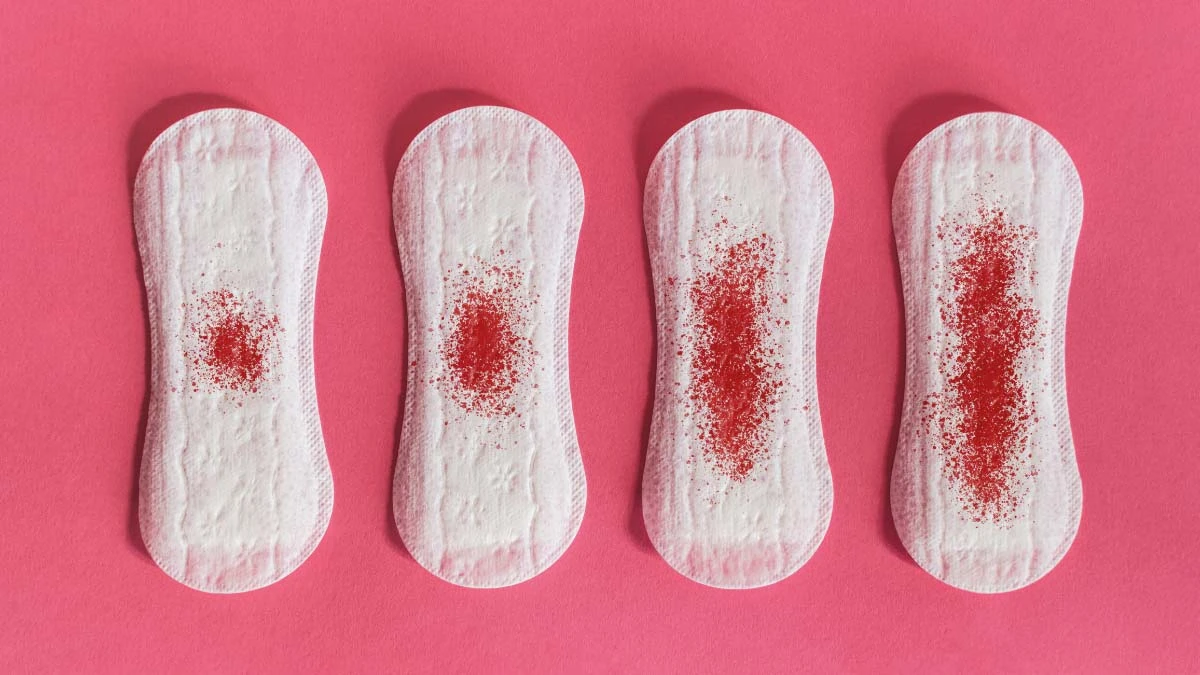
Your period is due in a few days. Then you wipe and see it: a little pink, or a smear of brown. Not the usual start of your period. Lighter. Different.
And suddenly you’re doing math in your head. Is this my period coming early? Or could I be pregnant?
If you’ve ended up searching “implantation bleeding” at midnight, you’re far from alone. Some of the most-searched questions about pregnancy are about exactly this. This guide walks you through what implantation bleeding is, what it looks like, how long it lasts, how to tell it apart from your period, and when it’s worth calling your doctor.
What is implantation bleeding?
After an egg is fertilized, it travels down the fallopian tube for several days and then attaches to the lining of your uterus. That attachment is called implantation, and it’s one of the very first steps of pregnancy.
The lining of your uterus (the endometrium) is thick and full of tiny blood vessels. As the fertilized egg burrows in, it can disturb a few of those vessels. That causes a small amount of bleeding, which you may notice as light spotting.
That spotting is implantation bleeding. It’s a normal part of early pregnancy and doesn’t harm you or the baby. Not everyone gets it. Cleveland Clinic estimates that about 1 in 4 pregnant women do.
When does implantation bleeding occur?
Implantation bleeding usually happens about 10 to 14 days after ovulation. In a regular cycle, that’s often right around the time your period is due, which is exactly why it’s so easy to confuse with an early or light period.
If you’re wondering how long after sex it can happen, the timing is less exact. Sperm can survive in the body for several days, so conception doesn’t always happen on the day you had sex. As a rough guide, implantation bleeding tends to show up somewhere around one to two weeks after the sex that led to pregnancy.
What does implantation bleeding look like?
Implantation bleeding is usually:
- Pink, light brown or dark brown. Brown means older blood that took a little longer to leave the body.
- Very light. Often just a spot in your underwear or on toilet paper when you wipe. A panty liner is usually all you need.
- Closer to discharge than to a period. It shouldn’t fill or soak a pad.
Can implantation bleeding be red? It can occasionally be a lighter red, but bright red or dark red bleeding that flows like a period usually isn’t implantation bleeding.
Can it be heavy, or have clots? No. Heavy bleeding or clots point to something else, like your period or, if you’re pregnant, a problem that needs to be checked.
Does it come with cramps? Some women feel mild cramping, but it should be lighter than your usual period cramps. Strong cramps or one-sided pain are not typical (more on this below).
How long does implantation bleeding last?
Anywhere from a few hours to about two days. Some women notice it only once. It should stop on its own.
Can it last five days? Bleeding that keeps going for five days or more, or that gets heavier instead of lighter, is unlikely to be implantation bleeding. It’s more likely your period, or something worth having looked at.
Implantation bleeding vs. your period: how to tell the difference
There’s no single sign that settles it, but these clues help.
- Color. Implantation bleeding is usually pink or brown. A period usually turns bright or dark red within a day.
- Amount. Implantation bleeding stays light, spotting or a panty liner at most. A period builds to a flow that needs a pad or tampon.
- How it changes. Implantation bleeding stays light and then stops. A period usually starts light and gets heavier.
- How long. Implantation bleeding lasts hours to about two days. A period usually lasts three to seven days.
- Cramps. With implantation bleeding, cramps are mild or absent. Period cramps are often stronger.
- Clots. Implantation bleeding doesn’t have clots. A period can.
The honest answer is that sometimes you simply can’t tell by looking. The only way to know for sure is a pregnancy test, at the right time (see below).
Does spotting always mean implantation bleeding?
No. And it doesn’t automatically mean you’re pregnant, either. Light spotting before your period can also come from:
- Ovulation spotting, which happens mid-cycle rather than right before your period
- Hormonal birth control, especially in the first few months or after a missed pill
- An irritated cervix, for example after sex or a Pap smear
- Uterine polyps, small growths in the uterine lining that can cause spotting between periods
- Infections, such as BV or other vaginal infections, and sometimes ureaplasma
- Fibroids or hormonal changes, including those of PCOS and perimenopause
If you keep spotting between periods month after month, it isn’t implantation bleeding. It’s worth a visit to find the cause. Spotting between periods is one of the most common reasons we do an in-office ultrasound.
How long after implantation bleeding can I take a pregnancy test?
This is where patience pays off.
Home pregnancy tests detect hCG (human chorionic gonadotropin), a hormone your body starts making only after implantation is complete. In the first few days, hCG levels are still very low. If you test during or right after the spotting, you may get a negative result even if you are pregnant.
For the most reliable home result, wait until the spotting has stopped and your period is officially late. Testing with first-morning urine also helps, because it’s the most concentrated.
If you get a negative result but your period still hasn’t come, test again in two to three days. hCG roughly doubles every couple of days in early pregnancy, so a test that was too early can turn positive soon after.
If you want an answer sooner, a blood pregnancy test can pick up hCG earlier and more precisely than a urine test. At Yunella, we order this, and you go for the blood draw at the lab in the building next door.
Trying to conceive with treatment? If you’re doing a letrozole IUI with us, follow the testing date on your personal timeline. The trigger shot contains hCG and can cause a false positive if you test too early.
When bleeding is not implantation bleeding: signs to call your doctor
Light spotting that stops within a day or two is usually nothing to worry about. But according to the American College of Obstetricians and Gynecologists (ACOG), bleeding in early pregnancy has other causes too, and some need prompt care.
Call your doctor if:
- The bleeding gets heavier, turns bright red, or you pass clots
- It lasts longer than two or three days
- You have a positive pregnancy test and then start bleeding
- You have cramping that’s stronger than a normal period
Get emergency care right away (call 911 or go to the ER) if you have:
- Sharp or severe pain, especially on one side of your lower belly
- Pain in the tip of your shoulder
- Dizziness, fainting, or feeling like you might pass out
- Heavy bleeding that soaks through a pad in an hour
These can be signs of an ectopic pregnancy, when a pregnancy implants outside the uterus, usually in a fallopian tube. It can’t continue, and it can become life-threatening if it isn’t treated quickly.
Bleeding after a positive test can also be the start of an early miscarriage. If that’s what you’re going through, our article Chemical Pregnancy: Was It a Miscarriage, and What Happens Next? explains what’s happening and what comes next. If it has happened more than once, we also offer evaluation for recurrent pregnancy loss.
Worried? Here’s what we do at Yunella
When you call us about bleeding in early pregnancy, we don’t make you wait and wonder. We can usually see you the same day or within two to three days.
- A blood test for hCG shows whether you’re pregnant and, repeated a couple of days later, whether the level is rising the way it should.
- An in-office ultrasound performed by Dr. David Seil Kim himself, once the pregnancy is far enough along to see. Dr. Kim scans you and explains what he sees in real time, so you’re not left waiting for a report.
- A clear plan for what happens next, whether that’s reassurance, a follow-up scan, or treatment.
If you are pregnant, this is also the best time to set up your prenatal care. At Yunella, that care is provided through our Concierge Maternity Experience, with direct access to Dr. Kim and an ultrasound at every visit. And if you’re over 35 or pregnant after IVF, read Pregnancy After 35 and Is an IVF Pregnancy Considered High Risk?
The bottom line
Implantation bleeding is light, pink or brown, lasts no more than a couple of days, and shows up around the time your period is due. It’s normal, harmless, and easy to mistake for a light period. The only way to know for sure is a pregnancy test taken at the right time.
If you’re unsure what you’re seeing, or something doesn’t feel right, you don’t have to figure it out alone. Book an appointment or call us at (424) 404-8832.
Medically reviewed by David Seil Kim, MD, PhD, MBA, FACOG · Last reviewed: October 21st, 2026