
Maybe you’ve been told your period pain is normal. That some women just have it worse. That you should take ibuprofen and push through. Maybe you’ve been told that for years.
For many women, that pain turns out to be endometriosis. It affects about 1 in 10 women of reproductive age worldwide, roughly 190 million people. Yet the average woman waits about 7 years from her first symptoms to a diagnosis, and some wait a decade.
Endometriosis is also one of the most common reasons women have trouble getting pregnant. This article covers what endometriosis is, the symptoms to look for, the myths that delay diagnosis, how it affects fertility, and how Dr. Kim approaches it at Yunella Women’s Health in Los Angeles. It also covers something patients deserve to hear plainly: there is still a lot that medicine doesn’t know about this disease.
What Is Endometriosis?
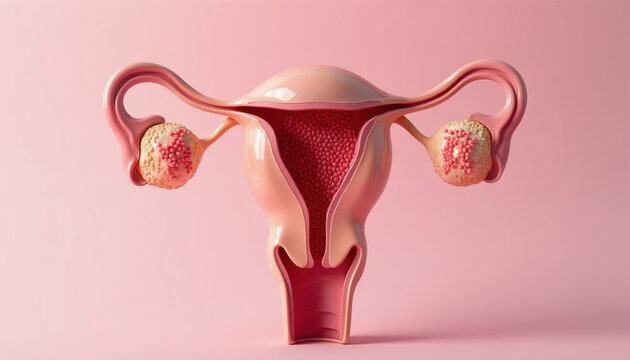
The uterus (the womb) is lined with tissue called the endometrium. It builds up each month and sheds as your period. In endometriosis, tissue similar to that lining grows outside the uterus, most often on the ovaries, the fallopian tubes, and the lining of the pelvis. Less often, it’s found on the bowel, the bladder, or even farther away, such as the chest.
That tissue responds to your monthly hormones, but it has nowhere to go. It causes inflammation, meaning irritation and swelling, which leads to pain and scar tissue. Scar tissue can stick organs together. These bands of scar tissue are called adhesions.
Sometimes endometriosis forms a cyst on the ovary filled with old, dark blood. This is called an endometrioma, or a “chocolate cyst” because of its color.
What Are the Symptoms of Endometriosis?
Symptoms vary a lot from woman to woman. Common ones include:
- Severe period cramps that get in the way of work, school or daily life, or that pain medicine doesn’t fully relieve
- Pelvic pain between periods that lasts for months
- Pain during or after sex, especially deep inside
- Pain with bowel movements or urination, especially during your period
- Heavy periods or bleeding between periods
- Bloating, sometimes called “endo belly,” that comes and goes with your cycle
- Nausea, diarrhea or constipation, especially around your period
- Lower back or leg pain around your period
- Fatigue that doesn’t match how much you’re sleeping
- Trouble getting pregnant
Some women have several of these. Others have none at all and only find out they have endometriosis while being checked for infertility. And the amount of pain doesn’t always match the amount of disease. Some women with small spots have severe pain, while others with large areas feel very little.
Common Myths About Endometriosis
Part of the reason diagnosis takes so long is that so much of what people believe about endometriosis is wrong.
Myth: Painful periods are normal. Some cramping is normal. Pain that makes you miss work or school, keeps you in bed, or isn’t helped by over-the-counter pain medicine is not. It deserves to be checked.
Myth: You need surgery to be diagnosed. For years, the only accepted way to diagnose endometriosis was laparoscopy, a surgery where a camera is passed through a small cut near the belly button. That’s no longer true. The European Society of Human Reproduction and Embryology (ESHRE) guideline says laparoscopy is no longer the “gold standard” for diagnosis, and that treatment can start based on your symptoms and imaging.
Myth: A normal ultrasound means you don’t have it. An ultrasound can show endometriomas and some deeper disease. But small, flat spots of endometriosis often don’t show up on any scan. A normal scan doesn’t rule it out.
Myth: Getting pregnant cures it. Symptoms often ease during pregnancy because periods stop, but they usually come back afterward. ESHRE specifically says women should not be encouraged to get pregnant as a way to treat endometriosis.
Myth: A hysterectomy cures it. Removing the uterus doesn’t remove endometriosis growing elsewhere in the pelvis. The World Health Organization notes that even a hysterectomy is not a cure.
Myth: It goes away at menopause. Symptoms often improve after menopause, when estrogen drops, but not always, and not for everyone.
Myth: Endometriosis means you can’t get pregnant. It can make getting pregnant harder, but many women with endometriosis conceive, some naturally and some with treatment. More on that below.
Myth: You’re too young to have it. Endometriosis can start with a girl’s first period. Teenagers with severe period pain deserve to be taken seriously too.
How Is Endometriosis Diagnosed?
There’s no single blood test for endometriosis. Diagnosis usually comes from putting several pieces together.
- Your story. Dr. Kim asks about your pain, your periods, sex, bowel and bladder symptoms, and how long you’ve been trying to get pregnant if that applies. Keeping a symptom diary for a couple of cycles helps.
- A pelvic exam. Tender spots, a uterus that doesn’t move freely, or a swollen ovary can all be clues.
- A transvaginal ultrasound. Dr. Kim does this ultrasound himself, in our office. It can find endometriomas on the ovaries and some deeper disease. ESHRE notes that ultrasound and MRI can be as accurate as surgery for finding these.
- An MRI, if he needs a more detailed look at deep disease, such as on the bowel or bladder.
- Laparoscopy, when imaging is normal but symptoms point strongly to endometriosis and treatment hasn’t helped, or when surgery is needed anyway. During laparoscopy, endometriosis can be seen directly and often removed in the same procedure. Dr. Kim performs laparoscopy himself.
In many cases, you don’t need surgery to start feeling better. If your symptoms and exam point to endometriosis, Dr. Kim may recommend starting treatment first.
How Does Endometriosis Affect Fertility?
According to the American Society for Reproductive Medicine (ASRM), up to 30 to 50 percent of women with endometriosis may have trouble getting pregnant. It can get in the way in several ways:
- Blocked or scarred fallopian tubes. The tubes are where sperm meets the egg. Scar tissue can block them or pull them out of place.
- Adhesions that bind the ovaries, tubes and uterus together, so the tube can’t pick up the egg.
- Inflammation in the pelvis that may affect eggs, sperm and the early embryo.
- Endometriomas on the ovaries, which can affect how many healthy eggs you have.
- Changes in the lining of the uterus that may make it harder for an embryo to implant, or attach.
The more extensive the disease, the harder getting pregnant tends to be. But even women with severe endometriosis can and do get pregnant, often with help.
Checking Your Fertility When You Have Endometriosis
If you have endometriosis, or think you might, and you want to get pregnant, it’s worth checking your fertility sooner rather than later. A fertility evaluation with Dr. Kim usually includes:
- A pelvic ultrasound in our office to look for endometriomas and check your ovaries
- A hormone panel, including AMH, a hormone that reflects your egg supply. This matters because endometriomas, and surgery to remove them, can lower it.
- A tube test to see whether your fallopian tubes are open. Dr. Kim does this in our office with HyFoSy, an ultrasound test with no X-rays.
- A semen analysis for your partner
Not trying yet? A preconception visit is a good time to talk about your timeline, especially if you have endometriosis and are thinking about waiting.
Getting Pregnant With Endometriosis
The right path depends on your age, your egg supply, whether your tubes are open, how severe your endometriosis is, and how much pain you have. The World Health Organization lists these fertility options:
- Trying naturally, for women with mild disease, open tubes and time on their side
- Ovulation induction, medication that helps the ovaries release an egg. Dr. Kim uses letrozole, a pill, in our office.
- IUI (intrauterine insemination), where washed sperm is placed directly in the uterus around the time you ovulate. Dr. Kim does this in our office too.
- Surgery, which ASRM notes can improve the chance of pregnancy, especially for moderate or severe disease
- IVF (in vitro fertilization), where eggs are fertilized in a lab. It’s often the most effective option when tubes are blocked or other treatments haven’t worked. Dr. Kim refers you to a fertility clinic for IVF.
One thing to know: hormone treatments that control endometriosis pain, such as birth control pills, also prevent pregnancy. If you’re trying to conceive, the plan has to balance the two, and that’s a conversation worth having early.
How Is Endometriosis Treated?
There is no cure for endometriosis yet. Treatment aims to control pain, slow the disease, and protect your fertility. Learn more about our endometriosis care. What’s right for you depends on your symptoms and whether you want to get pregnant now, later, or not at all.
Pain relief. Anti-inflammatory medicines such as ibuprofen can help milder pain.
Hormone treatment. Endometriosis is fed by estrogen, so medicines that calm the monthly hormone cycle often ease pain. These include birth control pills, patches or rings, progestin-only pills, a hormonal IUD (a small device placed in the uterus), and stronger medicines that temporarily lower estrogen. Most of them prevent pregnancy while you take them.
Surgery. Dr. Kim performs minimally invasive surgery for endometriosis himself. Using laparoscopy, he removes endometriosis spots, scar tissue and endometriomas through a few small cuts. Depending on your case, surgery is done either at PASC, our partner surgery center, or at Cedars-Sinai Medical Center. Surgery can relieve pain and may improve fertility. But endometriosis can come back, and surgery on the ovaries can lower your egg supply. That’s why the timing of surgery matters if you want children, and why it helps that the surgeon is the same doctor managing your fertility care.
Fertility treatment, if pregnancy is your goal, as described above.
Support beyond medicine. Pelvic floor physical therapy, counseling and support groups can make a real difference in daily life with chronic pain.
What We Still Don’t Know About Endometriosis
It’s important to be honest about this: endometriosis is under-researched, and that affects every woman who has it.
- No one knows exactly what causes it. The World Health Organization says the cause is unknown. Researchers are studying links to the immune system, genetics and family history.
- There’s no simple test. There’s no blood test, and imaging can miss early disease. A non-surgical test that can diagnose endometriosis reliably is one of the biggest needs in the field.
- There’s no cure. Current treatments control symptoms, and most hormone treatments can’t be used while trying to get pregnant. Better treatments that don’t stop pregnancy are badly needed.
- The funding hasn’t matched the need. In 2022, the National Institutes of Health spent about $16 million on endometriosis research, roughly $2 per diagnosed patient. By comparison, Crohn’s disease received about $130 per patient.
What this means for you: if you’ve felt dismissed, you’re not imagining it, and your symptoms are real. It also means good care depends on a doctor who listens carefully, explains what is and isn’t known, and works with you on a plan.
How Dr. Kim Approaches Endometriosis
At Yunella, the starting point is simple: your pain is real, and you deserve answers.
He listens first. Endometriosis is often missed because symptoms get brushed off. Dr. Kim takes the time to go through your history in detail, including the symptoms that are uncomfortable to talk about.
He looks for himself. Dr. Kim does your pelvic ultrasound himself in our office and goes over what he sees with you in the same visit. If he needs a closer look at the inside of your uterus, he can also do a saline ultrasound, which checks for problems such as polyps that can also affect fertility.
He plans around your goals. The right treatment if you want to get pregnant this year is very different from the right treatment if you don’t. Dr. Kim builds the plan around both your pain and your plans for a family.
He does the surgery himself. If you need surgery, Dr. Kim performs it, at PASC, our partner surgery center, or at Cedars-Sinai, depending on what your case calls for. You aren’t handed off to a surgeon you’ve never met. The doctor in the operating room is the one who examined you, read your ultrasound and knows your plans for a family, so he can weigh removing disease against protecting your ovaries and egg supply.
He keeps your fertility care in one place. From the fertility evaluation to letrozole and IUI, most of your care happens in our office, with the same doctor. If you need IVF, he refers you to a fertility clinic. And once you’re pregnant, he can see you through your prenatal care and delivery.
He’s honest about what’s known. Where the research is clear, he’ll tell you. Where it isn’t, he’ll tell you that too, and help you weigh your options.
Frequently Asked Questions
Can I have endometriosis even if my periods aren’t that painful? Yes. Some women have few or no symptoms and only learn they have endometriosis while being checked for infertility.
Is endometriosis the same as PCOS? No. PCOS is a hormone condition that can stop ovulation. Endometriosis is tissue growing outside the uterus. Both can affect fertility, and some women have both.
Will I need surgery? Not necessarily. Many women are diagnosed and treated without surgery. Surgery may be recommended if imaging shows an endometrioma or deep disease, if treatment isn’t helping, or as part of fertility care. If you do need surgery, Dr. Kim performs it himself.
Should I have surgery before trying to get pregnant? It depends. Surgery can improve your chances in some cases, but surgery on the ovaries can lower your egg supply. Dr. Kim checks your AMH and ultrasound first and talks through the trade-offs with you.
Does endometriosis affect pregnancy itself? Most women with endometriosis have healthy pregnancies. Some studies suggest a slightly higher chance of certain complications, but ESHRE notes the evidence is limited and doesn’t recommend extra monitoring just because you have endometriosis. Dr. Kim does an ultrasound at every prenatal visit either way.
Should I freeze my eggs if I have endometriosis? It’s worth discussing, especially if you have endometriomas, need ovarian surgery, or plan to wait a few years to try. ESHRE suggests talking through the pros and cons of fertility preservation with women who have severe ovarian endometriosis.
Can endometriosis come back after treatment? Yes, it can, which is why ongoing care matters more than a single treatment.
Does endometriosis get better after menopause? Often, but not always. If you’re approaching menopause, Dr. Kim can talk with you about what to expect.
Endometriosis Care at Yunella Women’s Health
You shouldn’t have to wait years to be taken seriously. If you have painful periods, pelvic pain, or trouble getting pregnant, Dr. Kim will listen, look for answers with his own ultrasound, build a plan around your pain and your plans for a family, and perform surgery himself if you need it. Learn more about our endometriosis care and fertility care.
Call 424-404-8832 or request an appointment to schedule a visit. You can also read what our patients say about their care with us.
Medically reviewed by David Seil Kim, MD, PhD · Last reviewed: October 8th, 2026
This article is for education and does not replace individualized medical advice.